
Best Smart Aquarium Systems of 2026
The best smart aquarium systems of 2026 combine automated dosing, LED control, and real-time monitoring. Top-rated systems for freshwater and reef tanks.
AQUATIC
Christina Pawlowski Pet Ecosystems Team
5/16/20269 min read
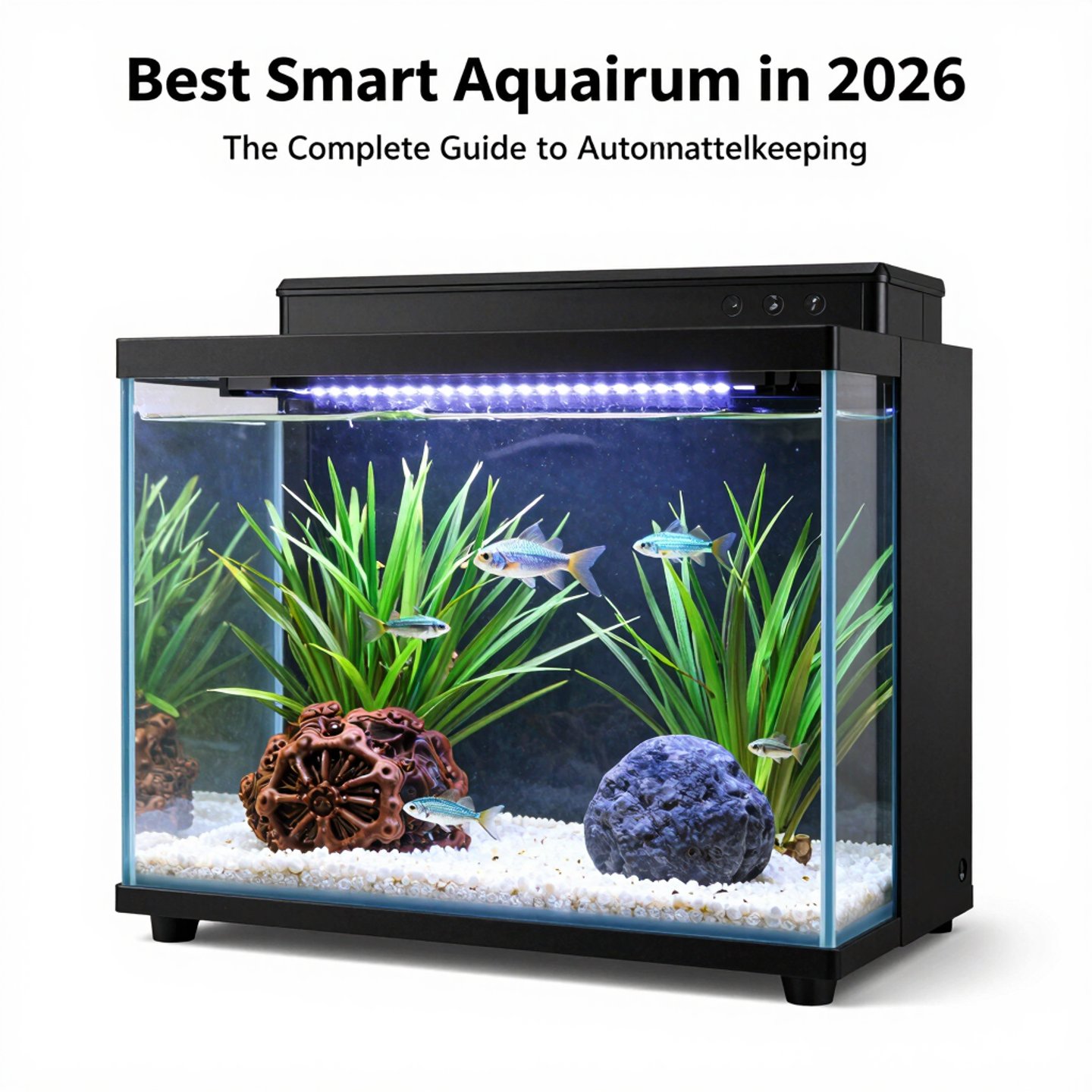
Best Smart Aquarium Systems in 2026: The Complete Automated Fishkeeping Guide
Traditional fishkeeping has always demanded consistency — the same feeding time every morning, the same water change every Sunday, the same manual parameter tests twice a week. For casual hobbyists, that routine is manageable. For anyone running a reef tank, multiple setups, or a display aquarium that simply cannot afford a crash, manual consistency is not enough.
Smart aquarium systems have changed the equation completely. Modern aquarium automation handles the repetitive work — monitoring water chemistry, running lighting schedules, dispensing food, managing dosing pumps — continuously and without error. The result is a more stable tank, healthier livestock, and a hobby that is genuinely less stressful to maintain.
This guide explains what smart aquarium systems actually do, how to match one to your specific setup, and what the best options look like across every budget and experience level in 2026.
Already researching automated water testing? Read our full Automated Aquarium Water Lab Review → for an in-depth breakdown.
What a Smart Aquarium System Actually Includes
The term "smart aquarium system" gets applied broadly — from a single Wi-Fi-enabled light to a fully automated reef management platform. Understanding the components helps clarify what you actually need.
A complete smart aquarium automation setup typically includes some or all of the following:
Water quality sensors — probes measuring temperature, pH, salinity/conductivity, ammonia, nitrate, and ORP, feeding continuous data to a central controller or app.
📏 Best Water Testing Upgrade
Hanna Reef Pro Checker Kit V2
Digital testing provides greater precision than traditional color-comparison kits.
👉 Check Current Pricing on Amazon
A controller hub — the brain of the system, processing sensor readings and executing automated responses: switching equipment on or off, triggering alerts, running dosing schedules.
Smart power management — controllable outlets that allow the hub to automatically cut or restore power to specific devices based on sensor conditions or programmed schedules.
Automated lighting — programmable LED systems running precise sunrise/sunset cycles, cloud simulations, and spectrum adjustments tuned for coral growth or planted tank performance.
Auto top-off (ATO) systems — sensors that detect evaporation and automatically add fresh RO/DI water to maintain stable salinity, one of the most tedious manual tasks in saltwater keeping eliminated entirely.
Automated dosing pumps — dispensing precise volumes of alkalinity, calcium, magnesium, and other supplements on a consistent schedule to support coral growth without daily manual additions.
🧠 Best Automated Dosing System
Red Sea ReefDose 4
Consistent, highly accurate dosing helps maintain stable alkalinity and calcium levels for coral growth.
👉 Check Current Pricing on Amazon
Smart feeders — dispensing consistent meal portions at programmed times, eliminating both overfeeding and missed feedings during travel or busy periods.
🍽️ Best Smart Feeder
(Eheim Auto Feeder is usually the safest recommendation)
Reliable automated feeding for vacations, work travel, and maintaining consistent feeding schedules.
👉 Check Current Pricing on Amazon
Leak and overflow detection — contact sensors on the floor near the sump that trigger immediate alerts and automatic pump shutoffs when water is detected outside the tank.
You do not need all of these to benefit from smart automation. Most hobbyists start with one or two components and expand as their system grows in complexity.
Why Stability Is the Core Argument for Aquarium Automation
Every benefit of smart aquarium systems ultimately traces back to one thing: stability.
Fish and corals evolved in environments where water chemistry changes slowly over days, weeks, and seasons — not hours. A pH swing from 8.3 to 7.9 over 24 hours in a reef tank can trigger bleaching in SPS corals and stress responses in fish that suppress immune function and increase disease susceptibility.
The problem with manual maintenance is that it is inherently inconsistent. A feeding gets skipped. A water change happens four days late. The dosing pump runs out and is not noticed for two days. These small lapses create the kind of parameter variance that accumulates into livestock losses.
Smart systems remove the human inconsistency from the equation. A properly configured aquarium automation setup runs the same routine every single day regardless of your schedule, your travel plans, or whether you simply forgot.
The Five Levels of Smart Aquarium Automation
Understanding where your current setup falls on this scale helps identify which technologies will deliver the most immediate value.
Level 1 — Basic Scheduling ($30–$100)
Digital outlet timers controlling lights and filtration on a fixed schedule. No monitoring, no app, no sensors. Still dramatically better than manual on/off switching for consistency.
Best for: Beginner freshwater tanks, office aquariums, anyone new to the hobby.
Level 2 — App-Connected Lighting ($80–$250)
Wi-Fi LED systems with programmable spectrum and intensity via smartphone app. Sunrise/sunset simulation, automated photoperiod, basic scheduling. First meaningful smart upgrade for most hobbyists.
Best for: Planted freshwater tanks, FOWLR marine systems, coral-curious beginners building toward a reef.
Level 3 — Basic Smart Controller ($150–$400)
A controller hub with temperature monitoring, smart power outlets, and basic alert notifications. Some pH and salinity probe support. Remote app access with push alerts for critical parameter swings.
Best for: Freshwater community tanks wanting protection, beginner marine setups, hobbyists who travel and need remote peace of mind.
Level 4 — Intermediate Reef Automation ($400–$700)
Full parameter monitoring (temperature, pH, salinity, ORP), automated dosing integration, leak detection, smart power management across all devices, and a reliable mobile app. This is where automation starts protecting significant livestock investment.
Best for: Mixed reef tanks (soft coral + LPS), dedicated marine systems, hobbyists with $500+ in livestock value.
Level 5 — Advanced Reef Controller ($700–$1,200+)
Full ecosystem integration with advanced if/then programming logic, multi-probe precision monitoring, integration with third-party equipment ecosystems (lights, pumps, skimmers), cloud data logging, and automated emergency response sequences.
Best for: SPS-dominant reef tanks, multi-tank fish rooms, hobbyists for whom a crash event means thousands of dollars in losses.
📱 Pet Ecosystems Top Pick Smart Aquarium Controller
Neptune Systems A3 Apex Jr. Aquarium Controller
✅ Temperature Monitoring
✅ pH Monitoring
✅ Leak Detection
✅ Level Sensor Monitoring
✅ Freshwater & Saltwater Compatible
✅ Apex Ecosystem Expandability
👉 Check Current Pricing on Amazon
What to Look for When Choosing a Smart Aquarium System
App Quality and Reliability
The app is not a secondary feature — for smart aquarium systems, it is the interface. A system with excellent hardware but a poorly maintained app becomes unreliable within months as operating system updates break compatibility. Always check recent app store reviews specifically for connectivity stability and update frequency before purchasing any controller-dependent system.
Ecosystem Expandability
The system you buy today should grow with your tank. A controller that cannot add a pH probe, integrate a dosing module, or communicate with a third-party light three years from now will eventually be replaced entirely. Modular systems with strong manufacturer support and growing accessory ecosystems protect your long-term investment.
Alert Response Speed
The value of a smart aquarium alert depends entirely on how quickly it arrives. A temperature spike alert that reaches your phone two hours after the event is not useful. Look for systems with documented near-real-time push notification response — ideally under 60 seconds from sensor trigger to phone alert.
Probe Calibration Workflow
Every water quality probe requires periodic calibration to maintain accuracy. Systems with easy, well-documented calibration procedures get calibrated regularly. Systems with confusing or time-consuming calibration workflows get skipped — and drifting probes are worse than no probes because they produce false confidence. Evaluate the calibration process before buying, not after.
Power Failure Behavior
What does the system do when the power goes out and comes back on? Some controllers restart all connected equipment simultaneously — potentially creating a current spike that trips breakers or stresses equipment. Quality systems have programmable restart sequences that bring equipment back online in a controlled order. This matters more than most buyers initially realize.
Matching Smart Aquarium Technology to Your Tank Type
Freshwater Community and Tropical Tanks
Priority automation: Lighting schedule, auto feeder, temperature monitoring with heater control.
Skip for now: Dosing systems, ORP probes, advanced salinity monitoring — not relevant to freshwater chemistry.
Recommended starting point: A quality Wi-Fi LED system with scheduling plus a basic temperature controller with smart outlet management. Total investment under $200 covers the automation needs of most freshwater setups completely.
Planted Freshwater Tanks
Priority automation: Precise CO2 injection scheduling tied to lighting cycle, programmable spectrum lighting tuned for plant growth, automated fertilizer dosing.
The key difference from standard freshwater: CO2 management is the most technically demanding element of planted tanks. A controller that can manage CO2 solenoid timing in conjunction with the lighting schedule eliminates one of the most common planted tank failure points.
Marine / FOWLR Tanks
Priority automation: Temperature control, salinity monitoring, lighting schedules, smart power management with leak detection.
Skip for now: Advanced dosing (fish-only tanks have minimal calcium/alkalinity demands), ORP monitoring (useful but not essential at this stage).
Recommended starting point: A mid-tier controller with temperature and basic salinity probe support, smart power management, and leak detection. This configuration covers the critical stability requirements for marine fish without overinvesting in reef-specific features.
Mixed Reef Tanks (LPS + Soft Coral)
Priority automation: Full parameter monitoring (temp, pH, salinity), automated ATO, basic two-part or kalkwasser dosing, smart lighting with coral-appropriate spectrum scheduling.
The key difference from FOWLR: Coral calcification consumes alkalinity and calcium continuously, creating daily parameter drift that manual dosing cannot match in consistency. Automated dosing is the single highest-impact upgrade for any tank housing stony corals.
SPS-Dominant Reef Tanks
Priority automation: Everything above, plus: advanced dosing (3-part or calcium reactor controller integration), ORP monitoring, redundant temperature probes, programmed emergency shutdown sequences, cloud data logging for trend analysis.
The honest reality: At this level, the aquarium controller is not optional equipment — it is fundamental infrastructure. An SPS reef housing $1,000–$3,000 in coral frags is simply not manageable long-term without automation. The controller cost represents a small fraction of what it protects.
Common Smart Aquarium Automation Mistakes
Automating before understanding the manual process. Smart systems amplify both good and bad tank management. If you automate a dosing schedule before understanding your tank's actual alkalinity consumption rate, you will dose incorrectly faster and more consistently. Learn the manual process first, then automate it.
Buying maximum features before needing them. A beginner freshwater hobbyist with a 20-gallon community tank does not need a Neptune Apex. Overbuying leads to underutilized complexity, which often leads to the system being bypassed entirely. Match automation level to actual tank requirements.
Ignoring probe maintenance schedules. Smart system accuracy depends entirely on probe accuracy. A pH probe that has not been calibrated in six months may read 0.3–0.5 pH units off baseline. Build probe calibration into your monthly routine the same way you schedule water changes.
Not testing alert delivery before relying on it. Every alert configuration should be tested deliberately before being relied upon in a real emergency. Trigger the temperature alert manually. Confirm the notification arrives on your phone. Verify the right equipment responds. This takes ten minutes and should happen during initial setup.
Frequently Asked Questions
Are smart aquarium systems worth it for beginners? Yes — at the right entry point. A beginner does not need a full reef controller, but a Wi-Fi LED system and an auto feeder immediately remove two of the most common beginner failure points (inconsistent lighting and overfeeding). Start simple and expand as the tank's needs grow.
Can smart aquarium systems prevent tank crashes? They significantly reduce the risk of the most common crash causes — temperature spikes, equipment failures, and parameter drift. No system eliminates all risk, but a controller with real-time monitoring and immediate push alerts gives you the fastest possible response window when something goes wrong.
What is the most important automation upgrade for a reef tank? Automated ATO (auto top-off) followed by automated dosing. These two systems eliminate the daily manual tasks that create the most parameter variance in reef tanks. Everything else is valuable — but these two are where stability improvements are most immediately visible.
📊 Best Monitoring Display
AvidAqua Insight Pro
Real-time monitoring display that complements advanced controller systems and provides at-a-glance visibility into key tank parameters.
👉 Check Current Pricing on Amazon
Do smart aquarium systems work with all equipment brands? Most controllers manage equipment through standard outlet switching (on/off) — which works with virtually any heater, skimmer, or pump. Variable speed control and direct protocol integration (for lights, DC pumps, etc.) requires brand-specific compatibility. Always check the compatibility list before purchasing.
How much should I budget for aquarium automation? A useful starting point by tank type:
Freshwater: $80–$200
Marine / FOWLR: $200–$400
Mixed reef: $400–$700
SPS reef: $700–$1,200+
These ranges cover the core automation needs for each tank type without significant overbuying.
🏆 Pet Ecosystems Recommended Smart Aquarium Setup
📱Neptune Systems A3 Apex Jr. Aquarium Controller
📊 Best Monitoring Display — AvidAqua Insight Pro
🧠 Best Dosing System — Red Sea ReefDose 4
📏 Best Water Testing Kit — Hanna Reef Pro Checker Kit V2
🍽️ Best Smart Feeder — Eheim Auto Feeder
👉 Check All Current Pricing on Amazon
Final Thoughts
Smart aquarium automation is no longer a niche interest for technology hobbyists — it is the most reliable path to stable, healthy tanks across every level of the fishkeeping hobby.
The right entry point is different for everyone. A freshwater keeper needs a Wi-Fi light and an auto feeder. A reef keeper needs a full controller ecosystem. The common thread is that every level of automation reduces the manual inconsistency that causes most of the losses, crashes, and frustration that drive hobbyists out of the hobby.
Start where your tank is. Automate what matters most for your specific livestock. Build from there.
See how automated water testing fits into a smart aquarium setup. Read our full Automated Aquarium Water Lab Review → — inline testing, app integration, and who benefits most.
Related: Best Aquarium Controllers Guide · Best Reef Tank Lights 2026 · Aquatics Guide
Affiliate disclosure: Pet Ecosystems participates in affiliate marketing programs. We may earn commissions from qualifying purchases made through links on this site at no additional cost to you. Our recommendations are based on independent research and editorial review.