
Best Canister Filters for Large Tanks in 2026 (Top Picks Reviewed)
The best canister filters for large aquariums compared: Fluval FX6, Oase BioMaster Thermo, Eheim Classic 600, and more. Flow rates, media capacity, and honest verdicts for 75–400 gallon tanks.
AQUATIC
Eli Flores Pet Ecosystems Team
5/16/202611 min read
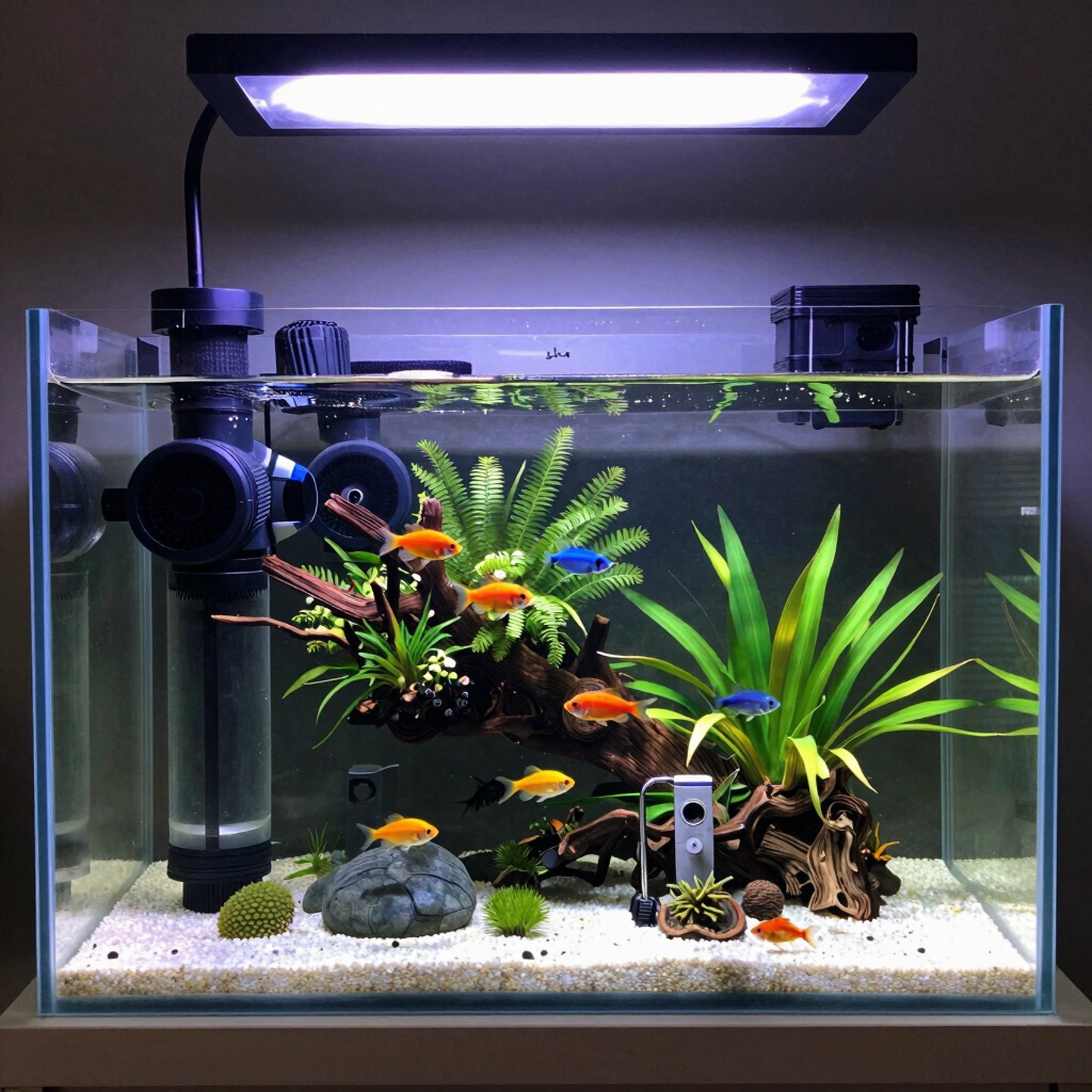
Best Canister Filters for Large Tanks in 2026 — Tested & Compared
Choosing the best canister filter for large tanks is one of the most important decisions you'll make for a high-volume aquarium. The right filter keeps your water crystal clear, stabilizes your nitrogen cycle, and reduces long-term maintenance. The wrong one can lead to cloudy water, ammonia spikes, dead spots, and constant upkeep headaches.
In this guide, we compare the best canister filters for large tanks in 2026, including top-rated models from Fluval, Oase, Eheim, and Marineland. Whether you're running a heavily stocked monster fish tank, a planted aquascape, or a large community aquarium, choosing the right filtration system directly impacts water quality, fish health, and overall tank stability.
We tested and compared flow rates, media capacity, noise levels, reliability, ease of maintenance, and real-world performance across tanks ranging from 75 to 400+ gallons. You'll also find straightforward recommendations based on tank size, stocking level, and aquarium type — plus a plain-English breakdown of what those filtration specs actually mean in practice.
Why Large Tanks Need Canister Filters (Not Just Any Filter)
Once a tank crosses the 75-gallon threshold, the filtration math changes significantly. More water volume means:
Higher bioload — more fish waste, more ammonia, more demand on beneficial bacteria colonies
More surface area to circulate — dead spots form in corners and behind decor where waste accumulates and oxygen drops
Greater debris volume — uneaten food, plant matter, and fish waste require stronger mechanical filtration to stay suspended and captured
Hang-on-back (HOB) filters can handle moderate-sized tanks adequately, but their media baskets max out quickly on large setups. Running two or three HOB filters to compensate creates maintenance complexity and rarely matches the flow and biological capacity of a single quality canister.
Canister filters solve all three problems at once:
FeatureCanister FilterHOB FilterMedia capacityLarge (1–4L+ trays)Small (1 cartridge)Flow rate controlAdjustableFixedNoise levelVery quietModerate to loudInline heater compatibleYes (many models)NoMedia customizationFull controlLimitedBest tank size50–400+ gallons10–75 gallonsSetup complexityModerateEasy
For tanks over 75 gallons — especially those with heavy stocking, cichlids, goldfish, or large predatory fish — a canister filter is the correct tool for the job.
How to Choose the Right Canister Filter: The Numbers That Matter
Before jumping to product picks, two specs determine whether a filter is actually sized for your tank:
Turnover rate: This is how many times the filter processes your full tank volume per hour. The general rule: aim for 5–10x turnover for most freshwater setups, 10x+ for heavily stocked tanks or goldfish, and 5–8x for planted tanks where you want steady circulation without excessive CO₂ disruption. A 100-gallon tank with 8x turnover needs a filter rated for at least 800 GPH (gallons per hour).
Media volume: Flow rate gets water through the filter — media volume determines how much biological and mechanical filtration capacity you have. More media means a larger colony of beneficial bacteria (Nitrosomonas and Nitrobacter) processing ammonia and nitrite. For large tanks, look for filters with at least 1.5–2 liters of total media space.
Most manufacturers rate their filters for a maximum tank size under "ideal" (lightly stocked, infrequent feeding) conditions. For heavily stocked tanks, step up one size from what the box recommends.
The 5 Best Canister Filters for Large Aquariums in 2026
1. Fluval FX6 — Best Overall for Large and Monster Tanks
Best for: 100–400 gallon tanks, heavily stocked setups, cichlid tanks, predator fish Flow rate: 925 GPH (3,500 LPH) Media capacity: 5.9 liters Price range: $350–$420
The FX6 is the benchmark against which every other large-tank canister filter gets measured, and for good reason. At 925 GPH with nearly 6 liters of media capacity, it's legitimately sized for aquariums up to 400 gallons — not just listed for them. The multi-stage stackable media baskets give you full control over your filtration sequence: mechanical pre-filtration first, then biological media, then chemical polishing on the outlet side.
The self-starting system — press the start button, it primes itself — removes the frustration of getting siphons started on a cabinet-mount canister. The utility valve locks for service without disconnecting hoses. Maintenance takes roughly 20–30 minutes every 4–6 weeks for a heavily stocked setup.
The FX6's downsides are real: it's large (sits on a 16" footprint in the cabinet), it's heavy when full, and at $350–$420 it's a significant investment. But for any tank over 125 gallons with real stocking density, it's the most defensible choice in the market.
Who should buy it: Anyone running a 125–300 gallon predator tank, African cichlid setup, or large goldfish pond-style aquarium. Overkill for a lightly stocked 100-gallon planted tank — save the money and buy the FX4 instead.
#1 Main Hero Product
Fluval FX6
👉 Check Current Pricing on Amazon
🌊 Pet Ecosystems Top Pick Large Tank Filter
✅ 925 GPH Flow
✅ Massive 5.9L Media Capacity
✅ Self-Priming Design
✅ Ideal for 125–400 Gallon Aquariums
2. Fluval 407 — Best for 75–100 Gallon Community and Planted Tanks
Best for: 75–100 gallon freshwater, community tanks, planted aquariums Flow rate: 383 GPH (1,450 LPH) Media capacity: 2.65 liters Price range: $160–$200
The 407 occupies the sweet spot for the most common large-tank footprint: the 75- and 90-gallon display aquarium. It delivers 383 GPH with a well-designed four-tray media basket system, runs exceptionally quietly, and Fluval's AquaStop valve makes maintenance clean and straightforward.
For planted tanks specifically, the 407's adjustable output works well with spray bars or lily pipes to create gentle, distributed surface agitation — enough gas exchange without the turbulence that drives off CO₂ in injected planted setups. The energy-efficient motor draws only 13W at full operation.
The 407 is not the right filter for a heavily stocked 100-gallon cichlid tank — the media volume and flow rate will be pushed beyond their comfort zone. For that application, step up to the FX4. But for a 75–90 gallon community tank or aquascape, the 407 is difficult to beat at its price point.
Who should buy it: Planted tank keepers, community aquarium enthusiasts, and anyone running a 75–90 gallon setup with moderate to light stocking.
#2 Community Tank Recommendation
Fluval 407
👉 Check Current Pricing on Amazon
🌿 Best Community Aquarium Canister Filter
✅ Quiet Operation
✅ Excellent Planted Tank Performance
✅ Easy Maintenance
3. Oase BioMaster Thermo 600 — Best for Aquascaping and Minimalist Setups
Best for: 75–160 gallon planted tanks, aquascaping, clean-look aquariums Flow rate: 158 GPH (600 LPH) Media capacity: 9 liters (with pre-filter) Price range: $280–$340
The BioMaster Thermo's defining feature is its integrated heater — a fully functional aquarium heater built directly into the filter body, with water heated inline before returning to the tank. This eliminates the visible heater tube from your aquarium entirely, which matters significantly if you're running an aquascape or minimalist display tank.
The pre-filter chamber on top is the BioMaster's second standout feature. Rather than opening the main canister for routine maintenance, you service the pre-filter weekly (a 5-minute job) and only open the main body every 2–3 months. In practice, this dramatically reduces the effort of maintaining good mechanical filtration on a planted tank where debris is constant.
At 158 GPH, the rated flow is conservative compared to the Fluval options — it's designed for aquascaping turnover rates (3–5x), not heavy stocking. Oase's engineering quality is exceptional: the motor is whisper-quiet, the seals are tight, and the build quality noticeably exceeds the price point equivalents from other brands.
Who should buy it: Aquascapers, planted tank enthusiasts who want a heater-free display, and anyone who values ultra-low maintenance frequency.
#3 Premium Aquascape Pick
Oase BioMaster Thermo 600
👉 Check Current Pricing on Amazon
🔥 Built-In Heater
That's unique and converts well.
4. Eheim Classic 600 (2217) — Best for Long-Term Reliability
Best for: 66–160 gallon freshwater tanks, experienced hobbyists, long-term setups Flow rate: 264 GPH (1,000 LPH) Media capacity: 6 liters Price range: $130–$170
Eheim has been manufacturing canister filters since 1964, and the Classic series — unchanged in its core design for decades — remains in production because it simply works. The 2217 uses an impeller design that generates minimal heat, runs at extremely low wattage (15W), and with proper maintenance routinely lasts 10–15 years. Replacement parts for the entire Classic series have been in continuous production for over 40 years.
There's no self-priming system, no quick-disconnect, no electronic controls. You fill the canister with water, reconnect the hoses, and start the motor. It either works or it doesn't — and it almost always works. For hobbyists who've replaced two cheaper filters in the time an Eheim has run continuously, the value proposition becomes clear.
The tradeoffs are real for 2026 buyers: no built-in heater, no flow adjustment, no fancy media tray system. Maintenance is slightly more hands-on than the Fluval or Oase options. But at $130–$170 for a filter that runs reliably for a decade, the math is compelling.
Who should buy it: Experienced hobbyists who prioritize longevity over features, fishroom operators running multiple tanks, and anyone who wants to buy one filter and forget about it for years.
#4 Reliability Pick
Eheim Classic 600
👉 Check Current Pricing on Amazon
🛠️ Best Long-Term Reliability
✅ Proven Design
✅ Extremely Quiet
✅ Often Runs 10+ Years
5. Marineland Magniflow 360 — Best Budget Option for 75–100 Gallons
Best for: Budget buyers, beginner large-tank setups, moderately stocked 75–100 gallon tanks Flow rate: 360 GPH Media capacity: ~1.8 liters Price range: $80–$110.
The Magniflow 360 is the most accessible entry into canister filtration for large-tank owners. It sets up in about 20 minutes, primes easily, and delivers genuine 360 GPH flow at a price point well under $110. For a lightly to moderately stocked 75-gallon community tank, it does the job.
The compromises are worth understanding before buying. The build quality is noticeably below the Fluval and Oase options — plastic components feel less substantial, and some users report needing O-ring replacements within 12–18 months. The media baskets are smaller, which limits biological filtration capacity on heavier bioloads. Budget an extra $15–20 for better biological media (ceramic rings or bio-balls) to get the most from what it does have.
For a moderately stocked community aquarium where cost is the primary constraint, it's a workable choice. For a heavily stocked or demanding tank, save the money and invest in a Fluval 407.
Who should buy it: Budget-conscious beginners with lightly stocked 75-gallon freshwater tanks who want to experience canister filtration before committing to a premium unit.
#5 Budget Pick
Marineland Magniflow 360
👉 Check Current Pricing on Amazon
💰 Best Budget Canister Filter
Comparison
Fluval FX6
Best Overall for Large and Monster Tanks
Max tank size: 400 gal
Flow rate: 925 GPH
Media capacity: 5.9L
Built-in heater: No
Self-priming: Yes
Price: $350–$420
Noise level: Very quiet
Best use case: Monster fish / heavy stock
Fluval 407
Best for Planted & Community Aquariums
Max tank size: 100 gal
Flow rate: 383 GPH
Media capacity: 2.65L
Built-in heater: No
Self-priming: Yes
Price: $160–$200
Noise level: Very quiet
Best use case: Planted / community tanks
Oase BioMaster Thermo 600
Best Premium Aquascape Filter
Max tank size: 160 gal
Flow rate: 158 GPH
Media capacity: 9L (with pre-filter)
Built-in heater: Yes
Self-priming: No
Price: $280–$340
Noise level: Whisper quiet
Best use case: Aquascape / planted setups
Eheim Classic 600
Best for Long-Term Reliability
Max tank size: 160 gal
Flow rate: 264 GPH
Media capacity: 6L
Built-in heater: No
Self-priming: No
Price: $130–$170
Noise level: Very quiet
Best use case: Long-term reliability
Marineland Magniflow 360
Best Budget Beginner Canister Filter
Max tank size: 100 gal
Flow rate: 360 GPH
Media capacity: ~1.8L
Built-in heater: No
Self-priming: Yes
Price: $80–$110
Noise level: Moderate
Best use case: Budget beginner setups
How to Set Up a Canister Filter for Best Performance
Media stacking order matters. Water should flow through mechanical filtration first (coarse sponge or filter floss to capture debris), then biological media (ceramic rings, bio-balls, or sintered glass), then chemical media (activated carbon, Purigen) last. Reversing this order sends debris through your bio-media, clogging it prematurely and reducing biological filtration efficiency.
Position the intake and output for full circulation. Place the intake in the area of your tank with the lowest flow — typically a back corner. Point the output return nozzle across the tank surface to push the full water column and prevent dead spots. In tanks over 150 gallons, consider adding a powerhead or circulation pump to supplement the canister's return.
Don't over-clean biological media. When cleaning the canister, rinse biological media in old tank water (never tap water — chlorine kills beneficial bacteria colonies). You want to remove accumulated waste without eliminating the bacteria that process ammonia. Only replace biological media if it physically deteriorates — most quality ceramic and sintered glass media lasts years.
Run the filter at capacity before adding stock. New canister filters need 4–6 weeks to establish a mature nitrogen cycle before handling a full bioload. If you're starting from scratch, use a bacterial seed product and cycle the tank before stocking.
Canister Filter vs. Sump: Which Is Better for Large Saltwater Tanks?
For reef aquariums and large saltwater setups, this question comes up consistently. The short answer: a sump wins at scale, but a canister filter is a legitimate and simpler alternative for tanks under 150 gallons.
A sump (a secondary tank below the display) provides enormous water volume, houses equipment like protein skimmers and refugiums out of sight, and creates a more stable system overall. It's the preferred approach for serious reef keepers. But it requires drilling the display tank (or overflow boxes), plumbing experience, and a larger cabinet footprint.
A canister filter on a saltwater tank — especially one paired with a protein skimmer — works well and is considerably easier to set up and maintain. The Fluval FX6 is regularly used on large FOWLR (fish-only with live rock) and even soft coral tanks with good results.
For the most connected reef tank experience, read our Automated Water Lab Review for real-time aquarium testing and Smart WiFi Reef Lighting setup guide.
Frequently Asked Questions
What is the best canister filter for a 100-gallon tank? For a heavily stocked 100-gallon tank, the Fluval FX4 or FX6 are the strongest choices. For a lightly stocked community or planted 100-gallon, the Fluval 407 delivers excellent performance at a lower price point. Match the filter to your bioload, not just your tank volume.
How often should you clean a canister filter? Most canister filters for large tanks need cleaning every 4–8 weeks, depending on bioload and feeding frequency. The Oase BioMaster's pre-filter system allows you to clean the mechanical stage weekly in 5 minutes, extending the main body's service interval to 2–3 months.
Are canister filters better than HOB filters for large tanks? For tanks over 75 gallons, yes — canister filters provide more media capacity, stronger and more controllable flow, quieter operation, and better biological filtration than equivalent HOB filters. The tradeoff is higher cost and slightly more complex maintenance.
Can you use a canister filter on a saltwater aquarium? Yes. Canister filters work well on FOWLR and lightly stocked saltwater tanks, especially when paired with a protein skimmer. For heavily stocked reef tanks over 150 gallons, a sump system is generally preferred for the additional water volume and equipment flexibility it provides.
What flow rate do I need for a large aquarium? Aim for 5–10x your tank volume per hour in turnover rate. A 100-gallon tank with moderate stocking needs 500–1,000 GPH. Goldfish, cichlids, and heavily stocked tanks benefit from the higher end of that range; planted and lightly stocked tanks can run at the lower end.
How do I prevent a canister filter from becoming noisy? Noise in canister filters is almost always caused by air bubbles trapped in the impeller chamber or hoses. Prime the canister fully before starting, ensure all hose connections are air-tight, and check that the intake is fully submerged. Premium filters like the Eheim Classic and Oase BioMaster are engineered to near-silent operation when properly set up.
🏆 Pet Ecosystems Recommended Large Tank Filtration Setup
🌊 Best Overall — Fluval FX6.
👉 Check Current Pricing on Amazon
🌿 Best for 75–100 Gallons — Fluval 407
👉 Check Current Pricing on Amazon
🔥 Best Premium Aquascape Filter — Oase BioMaster Thermo 600
👉 Check Current Pricing on Amazon
🛠️ Best Reliability — Eheim Classic 600
👉 Check Current Pricing on Amazon
💰 Best Budget Choice — Marineland Magniflow 360👉 Check Current Pricing on Amazon
👉 Check Current Pricing on Amazon
Final Thoughts
The right canister filter for a large tank comes down to matching the filter's actual capacity — not its marketing spec — to your stocking density, tank type, and maintenance preferences. The Fluval FX6 handles the heaviest bioloads in the hobby. The Fluval 407 is the most balanced performer for the most common large-tank footprint. The Oase BioMaster Thermo earns its premium price for aquascapers and anyone who wants a heater-free display. The Eheim Classic 600 is the choice for long-term reliability over features. And the Marineland Magniflow 360 gives budget-constrained beginners a genuine entry point into canister filtration.
Invest in the right filtration from the start — it's far easier to maintain a healthy large tank than to recover from an established water quality problem.
→ Explore all Aquatics Guides → Automated Water Lab Review → The Ultimate Smart WiFi Reef Lighting & Wavemaker
Affiliate disclosure: Pet Ecosystems participates in affiliate marketing programs. We may earn commissions from qualifying purchases made through links on this site at no additional cost to you. Our recommendations are based on independent research and editorial review.